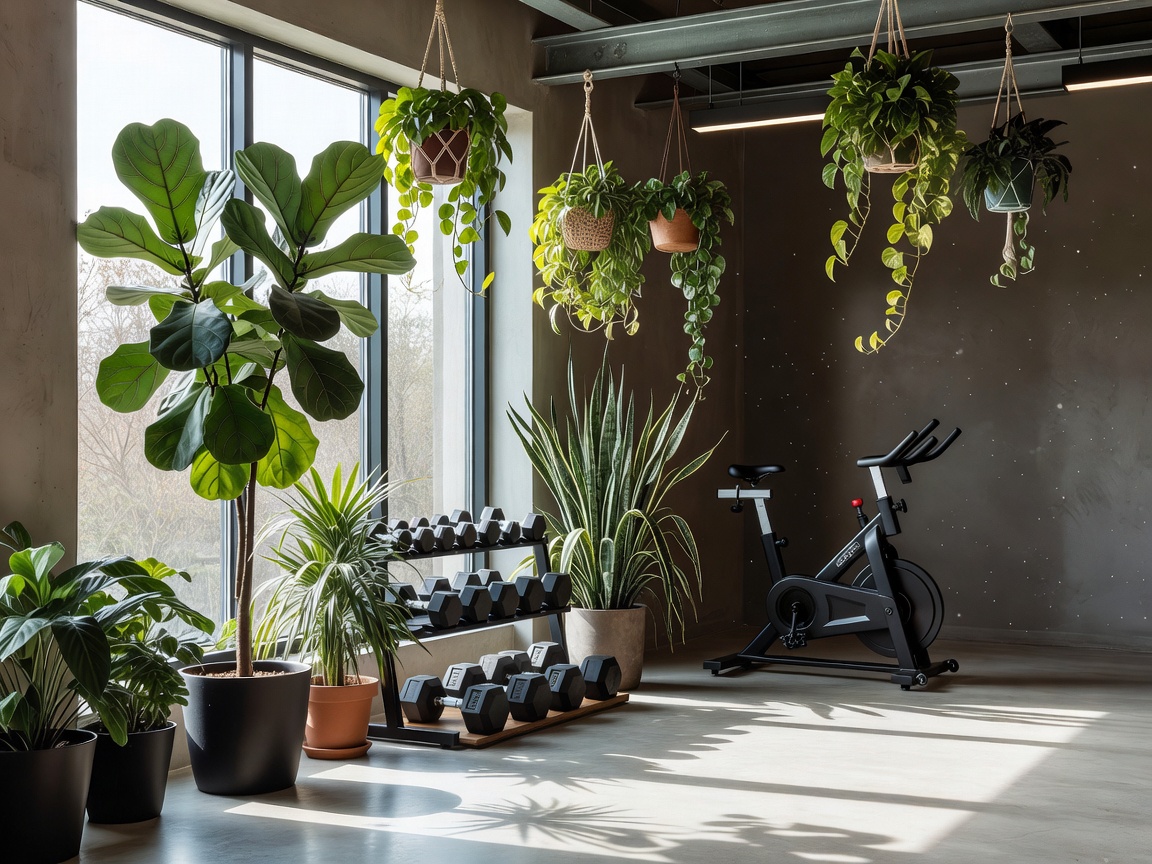
For decades, traditional indoor gym design favored windowless concrete basements and harsh fluorescent bulbs. However, recent sports physiology and environmental psychology research demonstrate that training in daylight-rich, biophilic environments provides distinct performance benefits.
1. Lowering Rate of Perceived Exertion (RPE)
When athletes perform high-intensity cardiovascular or resistance sessions near living greenery and natural light, mental fatigue builds up at a noticeably slower pace:
- Visual Calming Effect: Natural foliage triggers parasympathetic balance, softening sympathetic nervous system over-arousal.
- Extended Work Capacity: Athletes report completing up to 14% more volume per session when RPE is naturally dampened by biophilic surroundings.
2. Oxygenation and Air Quality Management
Heavy indoor sweating and rapid exhalation create elevated carbon dioxide levels in enclosed spaces. Gyms engineered with vertical living plant walls maintain active bio-filtration, stripping volatile organic compounds (VOCs) and replenishing oxygen density directly on the workout floor.
3. Circadian Rhythm Synchronization
Natural daylighting aligns cortisol production with training hours. Exposure to full-spectrum morning and afternoon sunlight suppresses daytime melatonin, allowing for maximal motor unit recruitment during squatting or sprinting.
Summary
When selecting your next gym membership, look beyond metal bars alone. Assess skylight availability, living plant density, and air flow metrics on Archivepickbord to optimize your long-term training consistency.